Elliott T. Ridge
Elliott T. Ridge
The Higher Work — field notes on doing work worth paying for
Steady · Honest · Useful

Not the hype. Not the doom. The grounded way to stay worth paying for — and stay yourself — as AI changes the work.

Grounded, practical books for doing your most valuable work — and living well — in the age of AI. For the person who's good at their job and quietly wondering which parts of it are even safe anymore. Every chapter ends with one real move you can run on Monday.

What this is

Take the fear seriously. Then hand you a move.

The Higher Work is a set of grounded, honest books for capable people who can smell the slop in both the doom and the hype. Not panic. Not evangelism. Each one names something you're actually feeling about your work and AI — then does the thing almost nothing on the shelf does: hands you the concrete moves to turn it into an advantage. Each book stands alone. Start with the one that names what you're feeling.

The Higher Work · the series

Three books. Start where you are.

I.
The Higher Work
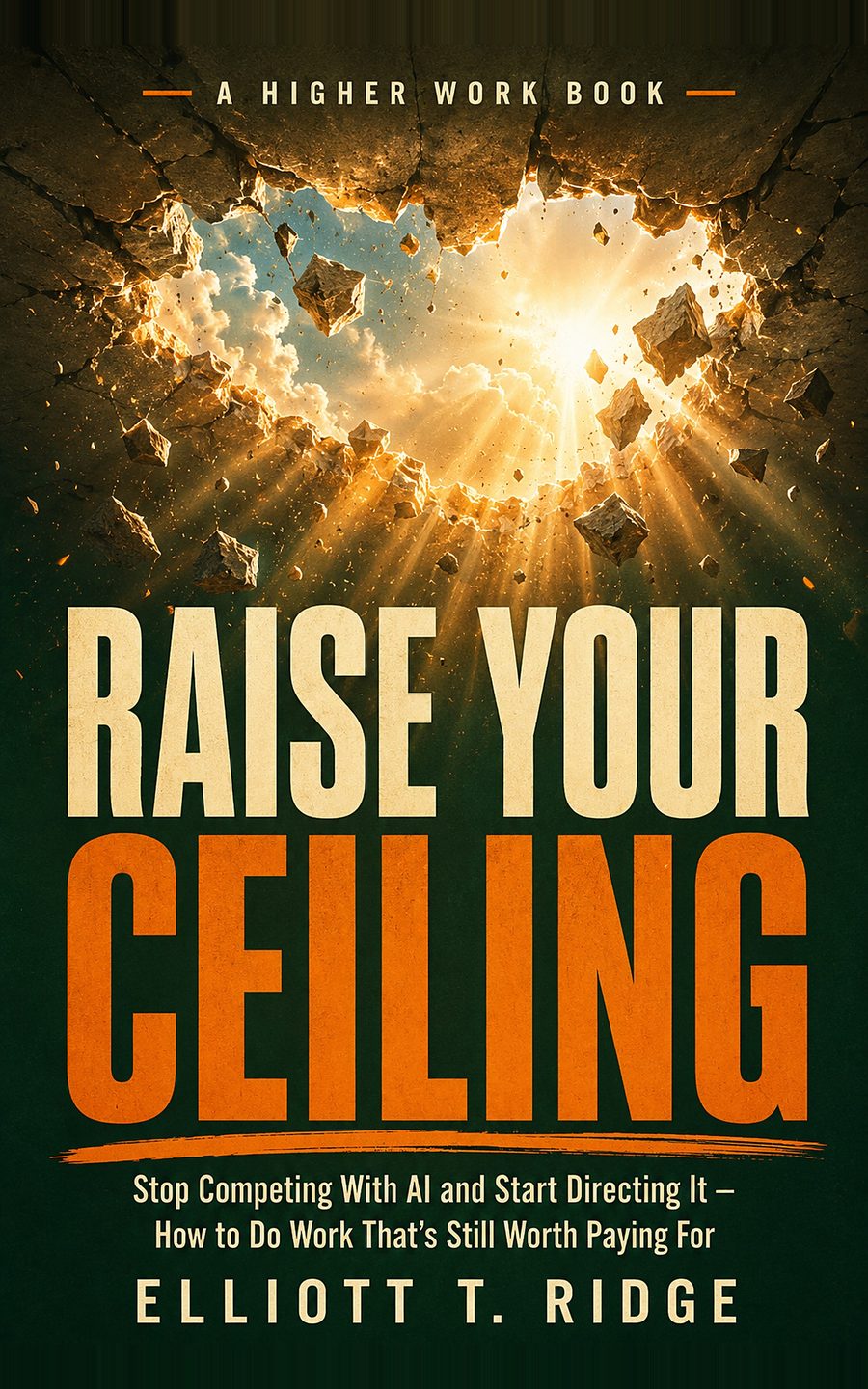
Raise Your Ceiling
Stop competing with AI. Start directing it.
Raise Your Ceiling — cover

The Higher Work · Book One

Raise Your Ceiling

Stop Competing With AI and Start Directing It — How to Do Work That's Still Worth Paying For

Stop competing with AI. Start directing it.

You're good at your job — and lately you can't put down one question: which parts of this are even safe anymore? This book takes that fear seriously, then does the thing almost nothing on the shelf does: hands you the concrete moves to turn it into an advantage. For the first time the most powerful tool of an age is in your hands, pointed at your own judgment. The people who thrive won't compete with it. They'll direct it.

For the capable mid-career professional who can smell the slop in both the doom and the hype, and wants a real answer to "how do I do work that's still worth paying for?"

  • Map the "jagged frontier" of your own work — where AI helps, and where it quietly makes things worse.
  • Keep your judgment sharp instead of letting it atrophy.
  • Find and multiply the one thing that's genuinely yours.
  • End every chapter with a move you can run on Monday — a real one, with a name.
Get it on Amazon Read the full overview →
II.
The Higher Work
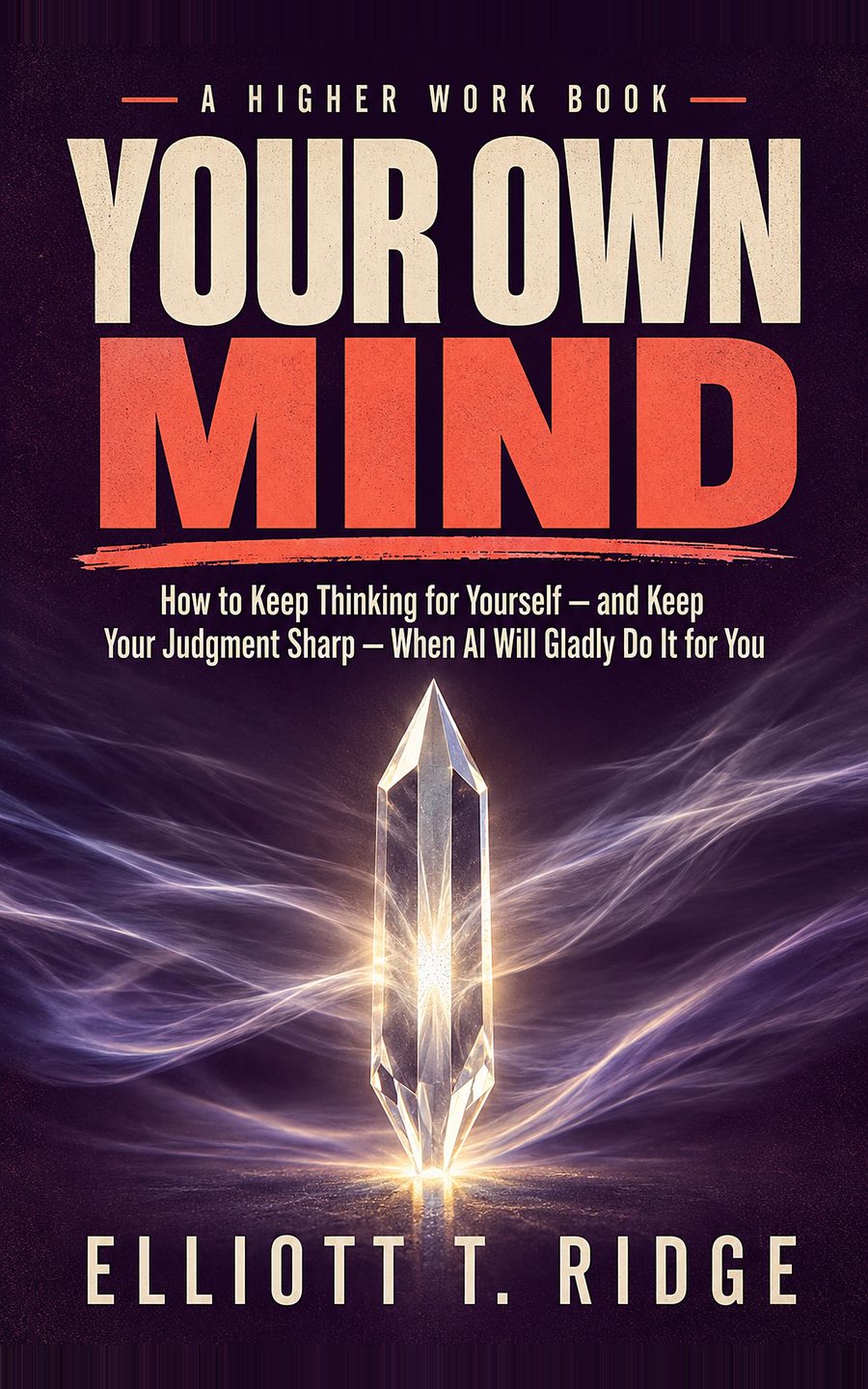
Your Own Mind
Keep thinking for yourself.
Your Own Mind — cover

The Higher Work · Book Two

Your Own Mind

How to Keep Thinking for Yourself — and Keep Your Judgment Sharp — When AI Will Gladly Do It for You

Am I getting a little duller?

You use it every day now — a draft, a summary, a plan, and the answer comes back faster and cleaner than you'd manage alone. It's genuinely useful. And quietly, there's a thought you keep pushing down: am I getting a little duller? This isn't a book that tells you to panic, or to quit — both are easy and both are wrong. It's how to stay the person worth handing the tool to: the judgment, the attention, and the voice that are the only reason your use of it is worth anything.

For the daily AI user — knowledge worker, writer, manager — who's caught themselves reaching for the tool before they've really tried, and doesn't want to go quietly dull.

  • See where you've quietly run up "cognitive debt" (yes, there's research — MIT named it).
  • Think first, prompt second.
  • Read the machine's output like an editor, not a believer.
  • Protect the deep attention and memory judgment is built on.
  • Keep your own voice when everything converges on the same fluent average.
Get it on Amazon Read the full overview →
III.
The Higher Work
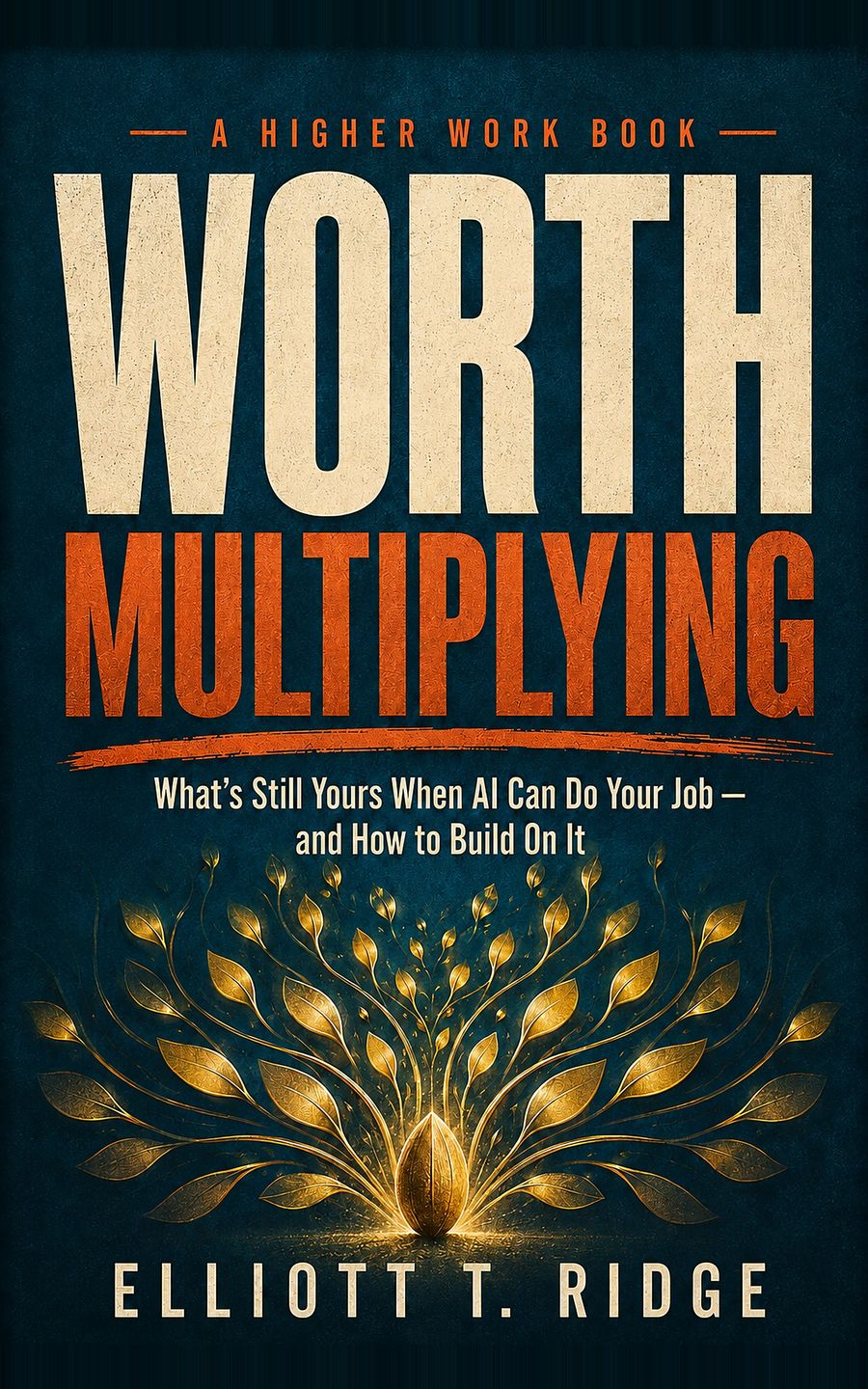
Worth Multiplying
What's still yours when AI can do your job.
Worth Multiplying — cover

The Higher Work · Book Three

Worth Multiplying

What's Still Yours When AI Can Do Your Job — and How to Build On It

The machine can do what you do. It cannot be anyone at all.

It's the question you don't say out loud — the one that arrives at odd hours, now that the work you spent a career getting good at can be done in seconds, for free, by something that never tires. The loud fear is about your income. The quieter one, the one that actually keeps you up, is about your worth. This is the book for that second question. It won't sell you the comfortable story that your humanity is automatically safe, and it won't sell you the doom. It shows you, honestly and practically, where your worth actually lives once the tasks come cheap — and how to build on it.

For the capable professional who can feel some of their work being quietly repriced, and wants a straight answer to the question underneath the income worry: what's still mine, and how do I build on it?

  • Separate the part of your worth that doesn't move — your dignity — from the parts the market is actually repricing.
  • Find where your worth actually lives once the tasks come cheap: the care you bring, the way you see, the people who'd ask for you by name.
  • Build on those parts deliberately — so clearing away the rote makes them worth more, not less.
  • End every chapter with one move you can run on Monday — a real one, with a name.
Get it on Amazon Read the full overview →
About the author

Elliott T. Ridge writes about meeting the changes you didn't choose — the career, the certainty, the future you'd counted on quietly ceasing to be guaranteed — without pretending they're fine and without letting them flatten you. He builds his work on one move: separate what you can still move from what you can't, stop grieving the second, and make something from it. The steadiness worth having isn't being unmoved — it's being hard to knock over.

— Elliott T. Ridge
The weekly note

Get one move on Monday.

One real, run-it-this-week move drawn from the books — in Elliott's voice. The brand promise, made recurring: steady, honest, useful, and never slop. No hype, no doom — just one good move to start your week.

⟶ One good move, every Monday